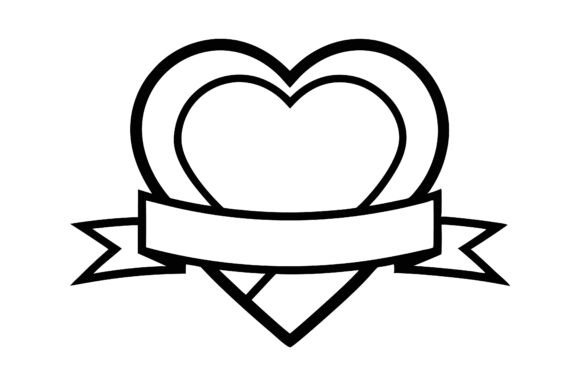
Line Art Heart Icon with Ribbon Vector: A Comprehensive Design Evaluation
In the realm of digital design and print production, visual assets must balance aesthetic appeal with technical precision. Among the most enduring symbols in graphic design is the heart, often paired with a ribbon to convey messages of love, charity, support, or remembrance. The Line Art Heart Icon with Ribbon Vector represents a specific stylistic approach that prioritizes clean lines, minimalism, and scalability. For designers, entrepreneurs, and content creators evaluating this asset type, understanding its technical specifications, application versatility, and limitations is crucial for making an informed purchasing or usage decision.
Understanding the Line Art Style
The term "line art" refers to images consisting of straight or curved lines placed against a solid background, without gradations in shade or hue. When applied to a heart icon featuring a ribbon, this style strips away complex shading and textures, focusing instead on the geometric purity and contour of the subject. This minimalist approach offers distinct advantages in modern design contexts where clarity and recognition at small sizes are paramount.
Unlike raster-based illustrations that rely on pixels, vector graphics are mathematically defined. This means that a Line Art Heart Icon with Ribbon Vector can be scaled from the size of a business card to the dimensions of a billboard without any loss of quality. For users researching design assets, this distinction between vector and raster is often the primary deciding factor in project viability.
Technical Specifications and File Formats
Evaluating the technical foundation of a design asset is essential for workflow integration. High-quality vector files typically come in several formats, each serving a specific purpose in the design pipeline. When sourcing a Line Art Heart Icon with Ribbon Vector, buyers should expect access to industry-standard file types:
- EPS (Encapsulated PostScript): A versatile format widely supported by professional printing presses and desktop publishing software like Adobe InDesign. It ensures high-fidelity output for physical products.
- SVG (Scalable Vector Graphics): The standard for web design. SVGs are XML-based, allowing them to remain crisp on all screen resolutions and enabling CSS manipulation for interactive web elements.
- DXF (Drawing Exchange Format): Crucial for users employing laser cutters or vinyl plotters. This format translates the vector paths into precise cutting instructions for materials like wood, acrylic, or fabric.
- PNG (Portable Network Graphics): While technically a raster format, PNGs included with vector packs usually serve as preview images or fallbacks for simple applications. They offer transparency but lack the infinite scalability of true vectors.
- AI (Adobe Illustrator): The native source file format. Access to AI files allows designers to edit individual anchor points, modify stroke weights, and customize colors directly within the Adobe ecosystem.
The availability of these formats ensures that the asset can be utilized across diverse mediums, from digital marketing materials to physical merchandise production.
Application Scenarios and Use Cases
The versatility of a line art heart with a ribbon makes it suitable for a wide array of projects. Understanding where this asset fits best helps potential users determine if it aligns with their specific needs.
Apparel and Merchandise
One of the most common applications for this design is in the apparel industry. T-shirts, hoodies, and tote bags often feature simple, bold graphics that read well from a distance. The line art style is particularly effective here because it translates cleanly to screen printing and heat transfer vinyl (HTV). The ability to easily swap colors allows for customization based on shirt color—using white lines on dark fabrics or black lines on light fabrics—ensuring maximum contrast and visibility.
Branding and Identity
For businesses in the healthcare, non-profit, or wellness sectors, the heart and ribbon motif is a powerful symbol of care and support. A Line Art Heart Icon with Ribbon Vector can serve as a foundational element for logos, letterheads, and business cards. Its simplicity ensures that the logo remains legible when printed on small stationery items or displayed as a favicon on a website.
Crafting and Physical Production
With the rise of home crafting and small-batch manufacturing, DXF and SVG files have become indispensable. Users creating custom wooden signs, metal wall art, or embroidered patches rely on the precise coordinate data provided by vector files. The clean lines of this specific icon ensure that cuts are smooth and details are preserved, reducing material waste and post-production finishing time.
Editorial and Publishing
In book covers, flyers, and social media graphics, typography and illustration often compete for attention. A line art graphic provides visual interest without overwhelming text. Its monochromatic nature allows it to integrate seamlessly with various color palettes, making it a flexible choice for event posters or campaign materials.
Benefits and Tradeoffs
While the Line Art Heart Icon with Ribbon Vector offers numerous advantages, it is important to consider its limitations to set realistic expectations.
Benefits
- Scalability: As noted, the vector nature ensures no pixelation regardless of size increase.
- Customizability: Users can alter stroke width, fill colors, and even manipulate the shape of the ribbon to fit brand guidelines.
- Print Readiness: These files are optimized for production, reducing the risk of errors during the printing process.
- Lightweight: Vector files generally have smaller file sizes compared to high-resolution raster images, facilitating faster web loading times.
Tradeoffs
- Lack of Texture: By definition, line art lacks shading, gradients, and texture. If a designer requires a photorealistic or highly detailed 3D effect, this asset will not suffice.
- Simplicity Bias: The minimalist style may feel too basic for projects requiring ornate or complex decorative elements.
- Software Requirements: To fully utilize the AI and EPS files, specialized software such as Adobe Illustrator, CorelDRAW, or Affinity Designer is required. Basic image viewers cannot edit these files effectively.
Decision-Making Considerations
When evaluating whether to acquire a Line Art Heart Icon with Ribbon Vector, consider the following questions:
- What is the end medium? If the final product involves cutting machines (Cricut, Silhouette) or large-format printing, vector formats are non-negotiable. For simple web icons, SVG is sufficient.
- Do you need editing capabilities? If you plan to modify the design extensively, ensure the purchase includes editable source files (AI/EPS). Pre-rasterized previews do not allow for structural changes.
- Is consistency across platforms required? If the design must look identical on a mobile app, a t-shirt, and a banner, the vector format is the only reliable solution.
- What is the aesthetic goal? If the desired look is modern, clean, and typographic-friendly, line art is an excellent choice. If a vintage, distressed, or painterly look is needed, alternative styles should be explored.
Conclusion
The Line Art Heart Icon with Ribbon Vector stands out as a functional, adaptable, and professionally robust design asset. Its value lies not just in its symbolic meaning, but in its technical flexibility. For users seeking designs that are easily customizable, print-ready, and scalable across multiple media types, this vector asset provides a strong foundation. By carefully assessing the technical requirements and aesthetic goals of your project, you can determine if this minimalist yet impactful design aligns with your creative objectives.
Whether you are designing a t-shirt collection, creating a charity crest, or developing a brand identity, ensuring access to high-quality vector sources like EPS, SVG, and AI files is a critical step in the production process. This asset offers the freedom to adapt and refine, making it a practical addition to any designer’s toolkit.