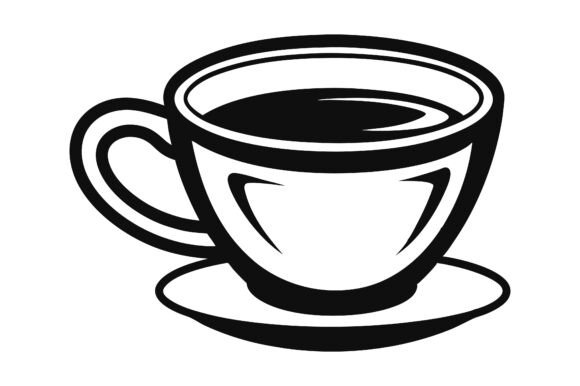
The Art of the Hand-Drawn Coffee Cup Silhouette: A Guide to Custom Vector Design
In the world of visual communication, few symbols are as universally recognized or emotionally resonant as a cup of coffee. It represents morning rituals, creative breaks, business meetings, and cozy evenings. For designers, brand owners, and hobbyists alike, incorporating this imagery into projects requires more than just a generic clip art image. The demand for Hand-Drawn Coffee Cup Silhouette designs has surged because they offer a level of personality and authenticity that flat, rigid graphics cannot match. Whether you are looking to create a distinctive logo, design a premium t-shirt, or craft an elegant book cover, understanding the nuances of hand-drawn vector art is essential for achieving professional results.
This guide explores why hand-drawn silhouettes are a preferred choice for modern design projects, how they differ from standard illustrations, and the practical benefits of using vector-based formats like EPS, SVG, and DXF. We will delve into the versatility of these assets, their applications across various industries, and the technical advantages that make them indispensable tools for creators.
The Aesthetic Appeal of Hand-Drawn Imagery
Why choose a hand-drawn style over a photorealistic image or a geometric icon? The answer lies in the human touch. A Hand-Drawn Coffee Cup Silhouette captures the imperfections and organic lines that mimic natural movement. This style evokes warmth, craftsmanship, and approachability. In an era where digital content can feel sterile, hand-drawn elements provide a sense of intimacy and connection.
When applied to merchandise such as t-shirts and mugs, these designs stand out. They suggest that the product was created with care, not just generated by an algorithm. For businesses in the hospitality industry, such as cafes and roasteries, this aesthetic aligns perfectly with values of artisanal quality and community. It signals to the customer that attention to detail matters, both in the brewing process and in the branding.
The silhouette format specifically offers a bold, high-contrast look. By removing internal details and focusing on the outline, the design becomes instantly readable even at small sizes. This makes it ideal for embroidery on hats, stamping on packaging, or printing on dark fabrics where intricate shading might get lost. The simplicity of the silhouette allows the shape itself to tell the story, relying on the viewer’s cultural association with the object to convey meaning.
Technical Advantages of Vector-Based Designs
One of the most critical aspects of purchasing or creating digital art is the file format. High-quality design assets should be scalable without losing resolution. This is where vector graphics excel. Unlike raster images (such as JPEGs or PNGs), which are made of pixels and become blurry when enlarged, vectors are mathematically defined paths. This ensures that a Hand-Drawn Coffee Cup Silhouette can be scaled from the size of a business card to the side of a building without any loss of quality.
Key File Formats Explained
Understanding the available formats helps you choose the right asset for your specific workflow. Here is a breakdown of the common formats associated with high-quality vector downloads:
- EPS (Encapsulated PostScript): A robust format widely used in professional printing. It preserves vector data and is compatible with most desktop publishing software, making it ideal for large-format prints like banners and signage.
- SVG (Scalable Vector Graphics): The gold standard for web design. SVG files are lightweight, load quickly, and can be manipulated via CSS or JavaScript. If you are designing a website or a mobile app interface, an SVG version of your coffee cup graphic ensures crisp rendering on all screen densities.
- DXF (Drawing Exchange Format): Essential for physical fabrication. If you plan to use a laser cutter or a vinyl plotter to create signs, decals, or stencils, the DXF format provides the clean path data needed for precise cutting.
- PNG (Portable Network Graphics): While technically a raster format, high-resolution PNGs with transparent backgrounds are useful for quick previews or for use in programs that do not support vector editing. However, for true scalability, vector formats are superior.
- AI (Adobe Illustrator): The native source file format. Having the AI file gives you complete access to the layers, anchor points, and color swatches, allowing for deep customization and editing.
By sourcing designs that include these formats, you future-proof your investment. You ensure that the same graphic can be used across print, digital, and manufacturing channels seamlessly.
Practical Applications Across Industries
The versatility of a Hand-Drawn Coffee Cup Silhouette extends far beyond simple decoration. Its adaptability makes it a valuable asset for a wide range of professionals and hobbyists.
Apparel and Merchandise
Fashion brands and independent artists frequently use silhouette designs for screen printing and direct-to-garment (DTG) printing. Because silhouettes require fewer colors and have clear edges, they are cost-effective to produce. A black silhouette on a white shirt creates a striking contrast, while a white silhouette on a navy blue shirt offers a subtle, sophisticated look. Furthermore, the ability to customize colors means you can easily adapt the design to match your brand’s palette, ensuring consistency across different product lines.
Branding and Identity
For startups and established businesses, a strong visual identity is crucial. A hand-drawn coffee cup can serve as the centerpiece of a logo, conveying a message of creativity and comfort. When combined with custom typography, it can form a cohesive brand mark. The organic lines of the drawing soften the overall look, making the brand appear more friendly and accessible. This is particularly effective for boutique cafes, bakeries, and lifestyle blogs.
Editorial and Publishing
In the realm of books and magazines, illustrations play a key role in capturing reader interest. A Hand-Drawn Coffee Cup Silhouette can be used as a chapter divider, a decorative element on a book cover, or an icon within an article about culinary arts or productivity. Its timeless appeal ensures that the design does not look dated quickly, providing long-term value for publishers.
Crafting and DIY Projects
Hobbyists who use cutting machines like Cricut or Silhouette love vector files because they plug-and-play. A designer who sells or shares DXF and SVG files enables crafters to create custom stickers, mugs, tote bags, and wall art with ease. The precision of the vector paths ensures that every cut is accurate, resulting in professional-looking finished products.
Customization and Flexibility
A major advantage of working with vector silhouettes is the ease of customization. Most professional design files allow you to alter colors, adjust stroke weights, and modify shapes to fit your specific needs. This flexibility is invaluable for adapting a single design to multiple contexts.
For instance, you might start with a basic coffee cup silhouette and add steam lines to suggest freshness, or add a spoon handle to indicate a ready-to-drink beverage. You can also experiment with negative space, using the background color to define parts of the cup. This level of control empowers designers to create unique variations that stand out in a crowded market.
Moreover, the ability to switch between light and dark mode adaptations is straightforward. A design that looks great on a white background can often be inverted for dark backgrounds with minimal effort, provided the original file is well-structured. This saves time and resources, allowing for rapid prototyping and testing of different visual concepts.
Considerations for Selection
When selecting a Hand-Drawn Coffee Cup Silhouette, it is important to consider the intended use case. Not all hand-drawn styles are created equal. Some may feature rough, sketchy lines that evoke a rustic feel, while others may have smooth, refined curves that suggest elegance. Understanding the tone you want to convey will help you choose the right asset.
Additionally, check the complexity of the design. Highly detailed silhouettes may not reproduce well on certain materials, such as textured fabrics or low-resolution printers. Simpler designs tend to be more versatile and reproducible. Always review the preview images and, if possible, test print the design before committing to a large production run.
Finally, ensure that the license terms meet your needs. Some designs are intended for personal use only, while others allow for commercial application. Understanding these rights protects you from legal issues and ensures that you can use the design confidently in your projects.
Conclusion
The Hand-Drawn Coffee Cup Silhouette is more than just a graphic; it is a versatile tool that bridges the gap between traditional artistry and modern digital production. Its ability to convey warmth, professionalism, and creativity makes it a staple for designers, marketers, and creators across various fields. By leveraging vector-based formats and understanding the nuances of customization, you can unlock the full potential of this classic motif. Whether you are launching a new brand, designing apparel, or crafting personal gifts, investing in high-quality, scalable vector art ensures that your vision is realized with clarity and impact. Embrace the organic beauty of hand-drawn design and elevate your projects with a touch of authentic charm.